 当前位置:首页>>Resources>>Industry News
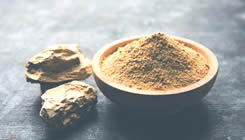
 Organoclay is an organically modified bentonite clay, primarily used as a rheological additive (thickener and gelant) in various oil-based and solvent-based systems. Its unique properties stem from a surface modification process that transforms naturally hydrophilic clay into an organophilic material.
Production Process
The manufacturing of organoclay involves a key chemical modification step:
Base Material: It starts with high-purity sodium bentonite, a natural clay mineral composed mainly of montmorillonite. This clay has a layered structure and a natural negative charge.
Purification & Preparation: The raw bentonite is purified and converted into a uniform sodium form to ensure consistency.
Organic Modification (Key Step): The clay undergoes a cation exchange reaction. The naturally occurring inorganic ions (e.g., Na⁺, Ca²⁺) on the clay's surface are replaced by organic cations, typically long-chain quaternary ammonium salts (e.g., dimethyl benzyl hydrogenated tallow ammonium chloride).
Result: This process inserts organic molecules between the clay layers (gallery), widening the interlayer spacing and changing the clay's surface character from water-attracting (hydrophilic) to oil-attracting (organophilic).
Finishing: The modified clay is then filtered, dried, and milled into a fine, free-flowing powder.
Primary Applications
Organoclay is valued for its ability to provide viscosity, prevent sagging, and suspend solids in non-aqueous systems. Major applications include:
Paints, Coatings, & Inks: Acts as a thickener and anti-settling agent, providing sag resistance in architectural paints and improved anti-settle properties in industrial coatings and printing inks.
Greases & Lubricants: Serves as a key gelling agent to structure oils, forming stable, high-temperature lubricating greases.
Drilling Fluids: An essential component in oil-based drilling muds, where it controls rheology, suspends weighting agents, and reduces fluid loss.
Adhesives & Sealants: Imparts thixotropy, ensuring easy application while preventing slump or flow in gap-filling applications.
Polymer Composites: Used as a nano-filler to enhance mechanical, thermal, or barrier properties in certain nanocomposites.
In summary, organoclay is a chemically engineered clay that provides crucial thickening and stabilizing functionality across a wide range of industrial, lubricant, and coating formulations.


 Add:Penghu Bay Industrial Park, Pengze County, Jiujiang City, Jiangxi Province, China
 Tel:+86 136 1672 4422 Contact:Mr. Bin
 Whatsapp / Wechat: +86 136 1672 4422
Jiangxi Vashlite New Material Co.,Ltd Copyright Reserved
Web:HuaShi